 Pallas
Reading 2 of 14 · Indiana Grade 4 Social Studies
The Miami at Kekionga
Read the story told here and take notes on the Narrative Notes Template provided by your teacher.
Chapter One: The Miami Build a Village Where Rivers Meet
In the early 1700s, Native Americans known as the Miami people lived in what is now Indiana and the lands nearby. They had lived in this region for many generations. One group of the Miami, called the Crane band, built their main village at a place called Kekionga, near where the city of Fort Wayne, Indiana, stands today. Kekionga was where Miami leaders met to make decisions for the whole tribe, so it became the heart of their nation. This safe, busy crossroads would soon catch the attention of outsiders, as French traders began paddling into Indiana looking for furs.
Chapter Two: French Traders Arrive and the Fur Trade Grows
French fur traders paddled up the Wabash River, a long, wide river that ran all the way across Indiana and down to the Ohio River, to Kekionga. The French traders wanted profits from selling their fur, and the Miami sat right in the middle of their path. The Miami saw a chance to benefit, too. They began trading furs and their special white corn for European goods like wool blankets, metal tools, and cloth. They also charged a fee at the portage, so every canoe that passed through added to their wealth. Trade boomed in Kekionga for the Miami nation.
Over about ninety years of trading with Europeans, the Miami rose to a height of power that no one could have predicted. The Miami kept farming, fishing, and hunting with the seasons, just as their families had done for a long time. But now they also lived in log houses and used European trade goods. The revenues flowing through the portage made Kekionga the wealthiest and most important place in Miami life.
Chapter Three: The Americans Take Kekionga and the Miami Move Downstream
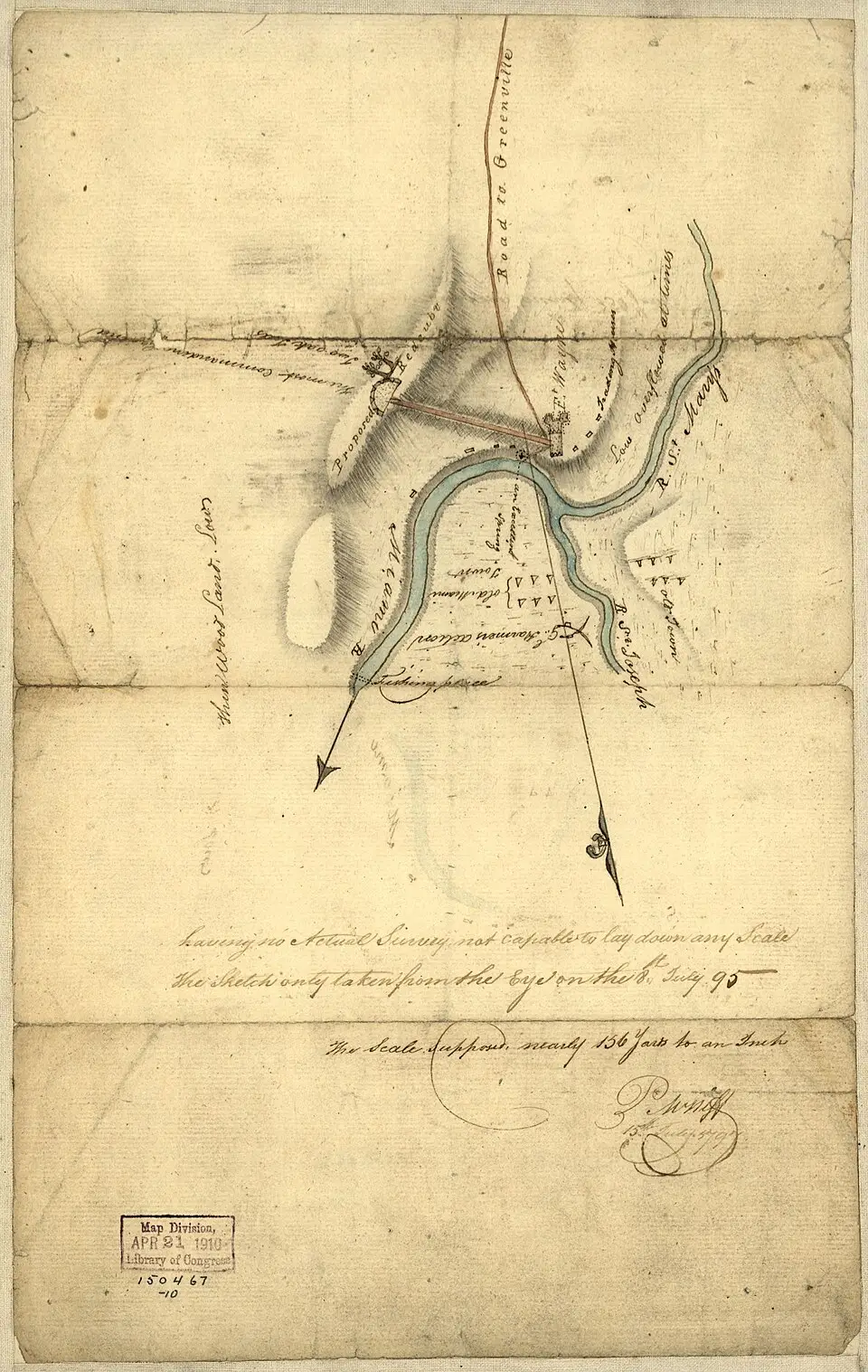
While the Miami were growing their wealth, American settlers were pushing further into Ohio and Indiana. Over time, American settlers saw how the Miami lived, and began to want the same rich land and river crossroads that had made the Miami strong. As a result, fighting broke out between the Miami's allies and American soldiers. Earlier American armies had lost these battles, but in August 1794, a new army led by General Anthony Wayne finally defeated the Miami. After this victory, Wayne marched his army to Kekionga, the Miami homeland. On the very ground where Miami families had built their village, Wayne's soldiers built a new American fort and named it Fort Wayne. One hundred American soldiers now guarded the crossroads that had once made the Miami powerful.
After the battle, the Americans and the Indian nations needed to make peace and decide who would control the land. So in the summer of 1795, General Wayne invited the Miami and many other tribes to a meeting at Greenville, in western Ohio, to sign a treaty. One of the Miami leaders there was Little Turtle, a respected war chief who had led Miami warriors to victory against American armies just a few years earlier. Even after his defeat at Fallen Timbers, people still listened when he spoke, and at Greenville he spoke up against the treaty. He argued that Miami lands had been taken without his people's agreement. But Wayne refused to listen. The other Miami chiefs sided with Wayne and agreed to sign. When the treaty was finished, the Miami gave up the portage and all the trade and wealth it had brought them.
With Kekionga gone, the Miami moved to smaller villages along rivers in northern Indiana. They kept farming, hunting, and gathering maple sugar. But the French and British traders were gone, and the Miami no longer controlled the portage that had brought traders and wealth to their door. Little Turtle stayed behind near Fort Wayne, promising to keep peace with the Americans. By the late 1790s, though, the Miami had lost Kekionga and the crossroads that had lifted them so high, and they would not get them back.