 Pallas
Reading 9 of 14 · Indiana Grade 4 Social Studies
Madam C.J. Walker Builds an Empire in Indianapolis
Read the story told here and take notes on the Narrative Notes Template provided by your teacher.
Chapter One: Sarah Breedlove Grows Up in Poverty
In 1867, a girl named Sarah Breedlove was born in Louisiana to parents who had once been enslaved. Her parents died when she was still very young, leaving her an orphan. With no family to care for her, Sarah had to work to survive. For years, she scrubbed other people's clothes for very little pay. But Sarah dreamed of something more. She wanted to earn her own money and make her own choices about how to live. In time, Sarah would move north, searching for a better life. She would find herself in a state where African American communities were already organizing for change.
African American women across Indiana refused to wait for fairness to arrive on its own. Between 1880 and 1920, they formed over five hundred clubs to fight for a better future. They organized schools, raised money for families in need, and pressed for change. They did this even as Black children were forced into overcrowded, run-down schools. African Americans were kept out of many jobs, neighborhoods, and public places. These women were determined to create opportunities that the world around them refused to offer.
Sarah Breedlove shared that same determination. She married a man named Charles Joseph Walker and began mixing and selling a hair-care formula she had invented herself. For her growing business, she took a new name: Madam C.J. Walker. Soon that name would travel far beyond where she started.
Chapter Two: Walker Launches Her Hair-Care Business in Indianapolis
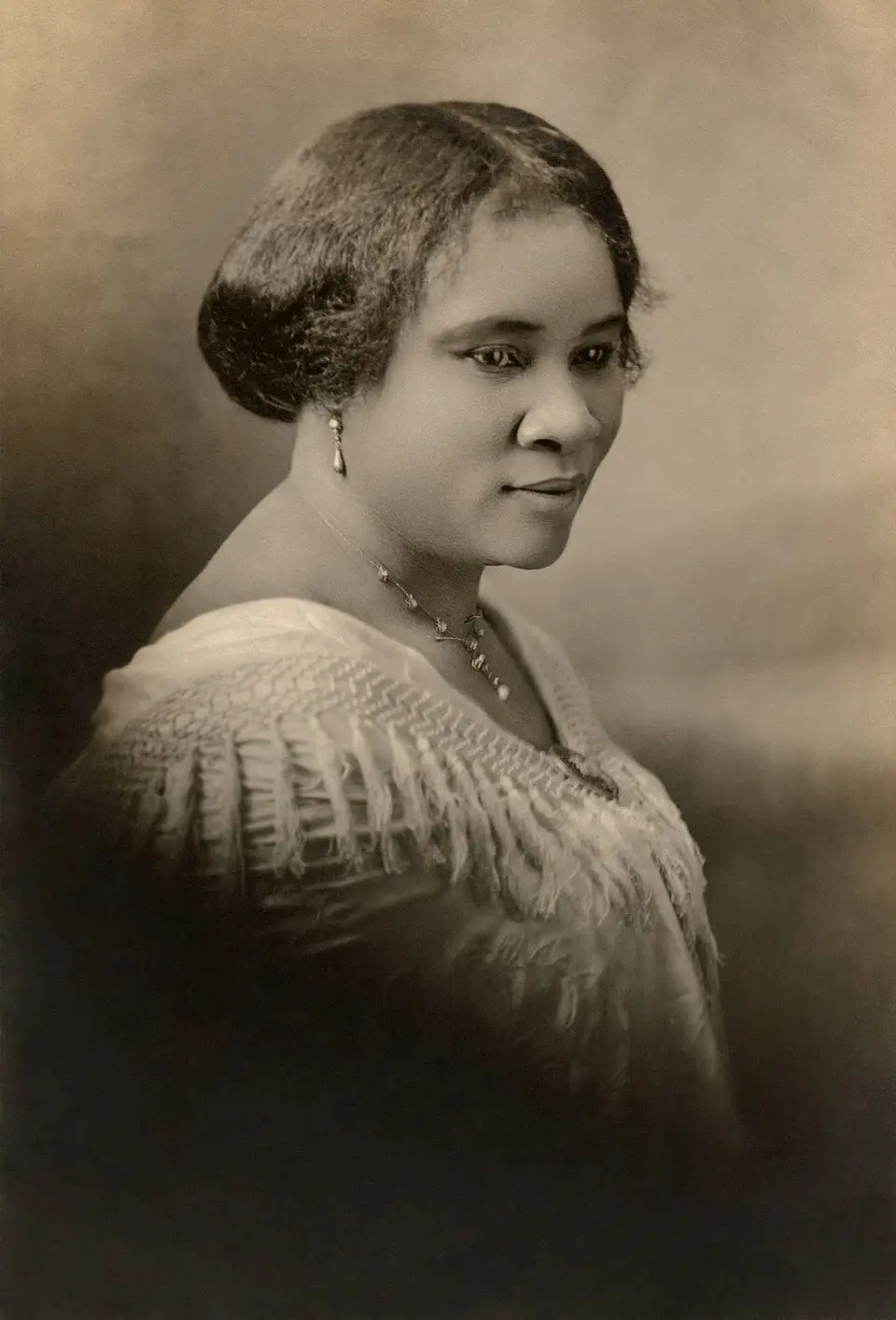
Around 1910, Madam C.J. Walker packed up her growing hair-care business and moved to Indianapolis, Indiana. Walker had spent years making her own products to help African American women care for their hair. Now she needed a home base where she could reach customers across the whole country. Indianapolis was perfect. It had a central location and railroad lines stretching out in every direction. The city also had a large, busy African American community.
Walker built a factory in Indianapolis and got to work. She trained thousands of women to sell her products door to door. They sold not just in Indiana but across the United States and even in other countries. These women were her sales agents. For many of them, this was a life-changing chance. They earned their own money by bringing Walker's products to customers in their homes and neighborhoods. Walker poured her success right back into the community, creating jobs and training workers. She became one of the most successful self-made businesswomen in the country.
Chapter Three: Walker Uses Her Fortune to Uplift Others
Madam C.J. Walker used her fortune to fight for the people and communities she cared about most. She gave money to Black schools, churches, and other groups across the country. Walker believed her wealth carried an obligation to uplift others, and she acted on that belief every chance she got.
Yet even as Walker rose higher, segregation (the unfair practice of keeping Black people and White people apart by law and by custom) pressed down on everything she and her community achieved. Because of it, Black people were barred from hotels, restaurants, theaters, and many public places. No amount of money or fame could shield Walker or her community from that injustice. Then, in 1919, Walker herself died at the age of fifty-one, worn out from years of hard work and travel. America lost one of its first self-made women millionaires, and the African American community lost one of its fiercest champions.
Walker's story did not end there. Her family kept running the company across four generations until it was sold in 1985. One of the company's grandest achievements was the Walker Building on Indiana Avenue in Indianapolis. The building included a theater, a ballroom, a beauty school, a restaurant, and offices for doctors and lawyers. For years, African American families gathered there for Sunday dinners, watched movies and live shows, and danced in the grand ballroom. At a time when Black people were shut out of many White-owned spaces, the Walker Building gave the African American community a place to come together and feel at home. Today, the Walker Building still stands as a National Historic Landmark and arts center — a reminder that Sarah Breedlove's journey from orphaned child to millionaire businesswoman changed lives far beyond her own.