 Pallas
Reading 8 of 14 · Indiana Grade 4 Social Studies
Immigrant Workers Build Booming Indiana
Read the story told here and take notes on the Narrative Notes Template provided by your teacher.
Chapter One: Indiana Settlers Farm a Frontier Country Town
In the 1830s, Indiana was still a rough frontier. Thick forests covered much of the land, and tiny towns dotted the countryside. Indianapolis, the state capital, had fewer than 3,000 people by 1840. The town had a few flour mills and a tannery (a place where animal hides are turned into leather), but almost nothing else. People there bought and sold only to each other. Indianapolis sat isolated and small, with no way to reach the wider world.
Outside of Indianapolis, Indiana farmers worked hard growing corn and raising hogs. These crops were their main way of making a living. But getting them to buyers far away was a huge problem. The roads were rough and muddy, and there were no canals or railroads to carry heavy loads. Without good roads or railroads, farmers were stuck selling only to their neighbors. Towns stayed small because there was no way to move goods very far.
Chapter Two: Immigrants Dig Canals and Lay Railroad Tracks
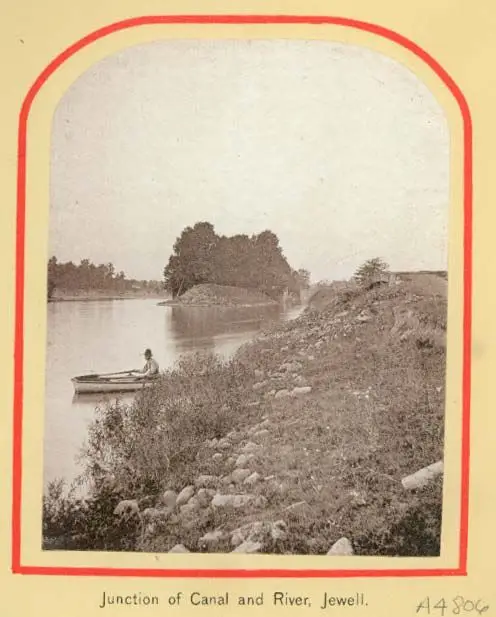
In the 1830s, Irish and German laborers came to Indiana looking for work and a new start in America. They hired on with construction companies and dug canals, which are long, narrow waterways dug into the ground. Canals allow boats to carry goods from place to place. As a result, the canals made it cheaper to send goods from place to place, but they broke down often and cost a lot to fix.
Because the canals kept breaking, railroad construction companies built new lines to connect Indiana's towns and rivers to outside markets. The Madison and Indianapolis Railroad reached the capital in 1847. Soon, more railroads followed. By 1854, seven new railroads connected to Indianapolis. The city earned the nickname "Railroad City." Trade and new businesses grew quickly, and the capital began to change fast.
German families did more than dig canals and lay tracks. Many of them settled across Indiana and farmed the land. In counties like Dubois and Vanderburgh, German families cleared forests, raised crops, and built farms of their own. By the 1850s, thanks to the canals and railroads these workers had helped build, farmers could ship corn and hogs to faraway markets. Indiana was no longer cut off from the rest of the country.
Chapter Three: Natural Gas and Railroads Power Indiana's Transformation
In 1886, workers struck natural gas, a fuel that can be used for energy, near Portland, Indiana. Town leaders drilled wells and offered free gas and free land to lure new businesses. Free gas was a big deal because it cost businesses nothing to burn, so factories could run their furnaces all day for far less money than burning coal. By 1890, Indiana had 162 new factories.
While Indianapolis had about 3,000 people in 1840, railroads, canals, and industries fueled by natural gas allowed the city to grow to over 105,000 by the 1890s. Its merchants and entrepreneurs filled the city with new shops, warehouses, and manufacturing plants. Other cities like Evansville, Fort Wayne, and Terre Haute grew quickly too. Less than half of Indiana's workers were farmers now. By the 1890s, Indiana had gone from a land of muddy roads and isolated corn fields to a state of farms, factories, and busy railroad cities, built by immigrants, farmers, and townspeople who had worked together to connect Indiana to the wider world.