 Pallas
Reading 11 of 14 · Indiana Grade 4 Social Studies
Indiana's Home Front and Battlefront in World War II
Read the story told here and take notes on the Narrative Notes Template provided by your teacher.
Chapter One: Indiana Struggles Before the War Arrives
In 1940, Indiana was one of the most important manufacturing states in the country. The state sat right in the middle of the country, connected by railroads and rivers that could move goods anywhere. Its workers were skilled, and its industries were strong. Indiana had a lot going for it.
But trouble was coming. The federal government started getting ready for a possible war. It gave most of its big military orders to factories in other states. At the same time, the government told factories to stop making so many cars and appliances. Without new military work to replace those lost orders, Indiana's workers faced a frightening slide toward unemployment. The state that had so much going for it was suddenly in danger of falling into a new depression.
Chapter Two: Evansville's Workers Build the P-47 Thunderbolt
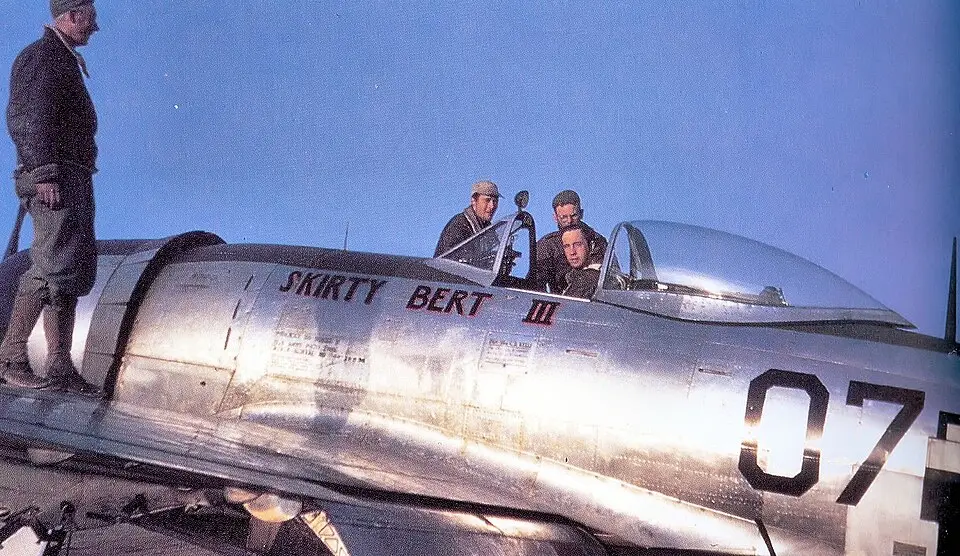
Then, in December 1941, Pearl Harbor came the attack on Pearl Harbor (located in Hawaii) was bombed as a part of World War II, the war the United States was being pulled into. The attack on Pearl Harbor changed everything. The United States felt the need to respond with strong military force, but it was desperately short of planes, ships, and weapons. As a result, the federal government chose Indiana for key war contracts because of its central location, skilled labor, and railroads. The government also built a massive new factory near Evansville, Indiana to produce P-47 Thunderbolt fighter planes. On September 19, 1942, the very first P-47 built in Evansville flew into the sky. It was nicknamed "the Hoosier Spirit." Allied pilots soon loved the tough, fast Thunderbolt because it could bring them home safely even after taking heavy damage.
By the end of the war, the Evansville factory had built more than 6,000 P-47 Thunderbolts — more than any other Thunderbolt factory in the country. The factory won three special military awards for doing such good work. Before the war, employers had barred women and Black workers from many of these jobs. Now women and Black Hoosiers had taken wartime jobs that had previously been closed to them.
Chapter Three: Hoosiers Count the Costs and Gains
When World War II finally ended in 1945 with the United States and its allies as the victors, the celebration in Indiana was loud and joyful. Factory whistles blew, and crowds danced in the streets. But the war's end also brought sudden hardship. Big factories that had made war supplies closed down. Thousands of workers lost their jobs almost overnight. Employers pushed women and Black Hoosiers out first as returning soldiers took their places. Indiana passed a law in 1945 to try to stop employers from refusing to hire people because of their race. But the law was too weak to make a real difference.
Yet the war had changed Indiana for good. The doors that wartime had opened could not be shut all the way. Some military bases, like the Crane ammunition depot — a place where the Navy stored weapons — stayed open and kept providing jobs. Factories that had built planes and engines switched to making peacetime products. By 1946, Indiana's factories were producing more than ever before, and the wartime skills Indiana's workers had gained carried the state forward.