 Pallas
Reading 12 of 14 · Indiana Grade 4 Social Studies
Indiana's 1851 Constitution Shapes Hoosier Government
Read the story told here and take notes on the Narrative Notes Template provided by your teacher.
Chapter One: Indiana Adopts a New Constitution
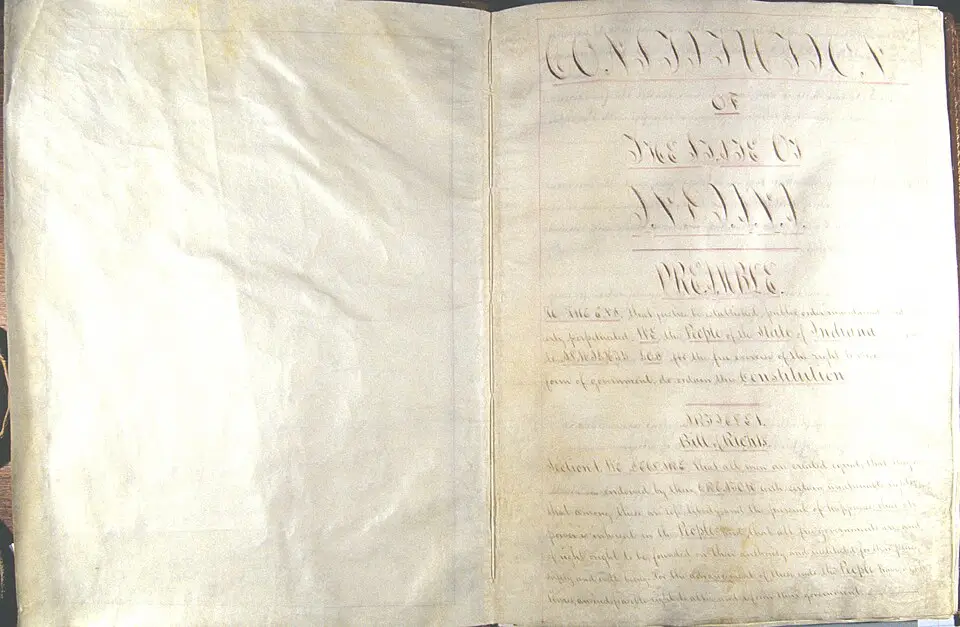
In 1851, Indiana was bursting at the seams. The state had grown from about 64,000 people to nearly a million since its first constitution in 1816. The old rules could no longer handle serious problems like heavy debt and unfair taxes. So, one hundred and fifty delegates gathered in Indianapolis to write a brand-new constitution. They wanted to fix the troubles that had built up over the years and create a government that worked better for everyone.
The delegates created an Indiana Bill of Rights protecting each person's rights and freedoms. They set up popular elections, banned the state from piling up dangerous debt, and promised to build public schools. They also split Indiana's government into three parts: a General Assembly to make laws, a governor to carry them out, and a system of courts led by the Indiana Supreme Court to settle disputes. That way, no single group could hold too much power. Hoosier voters approved the new constitution by a wide margin.
Chapter Two: Three Branches Govern Under the Indiana Constitution
But on that very same ballot, Hoosier voters made another choice. They approved a law that would ban African Americans from moving into Indiana. Out of Indiana's ninety-one counties, only four voted against it. Deep anti-Black feelings ran through Indiana and much of the nation at midcentury. By voting to ban Blacks from moving into Indiana, Hoosier voters wrote racial exclusion directly into the new constitution.
Year after year, the Indiana General Assembly enforced unfair rules called the "black laws." These laws kept Black people from voting, from testifying in court against white people, and from attending school alongside white children. African Americans in Indiana lived under these laws every day. Even as other Hoosiers enjoyed new freedoms under the constitution, the state pushed aside an entire group of people.
Chapter Three: Courts and Amendments Expand Hoosier Rights
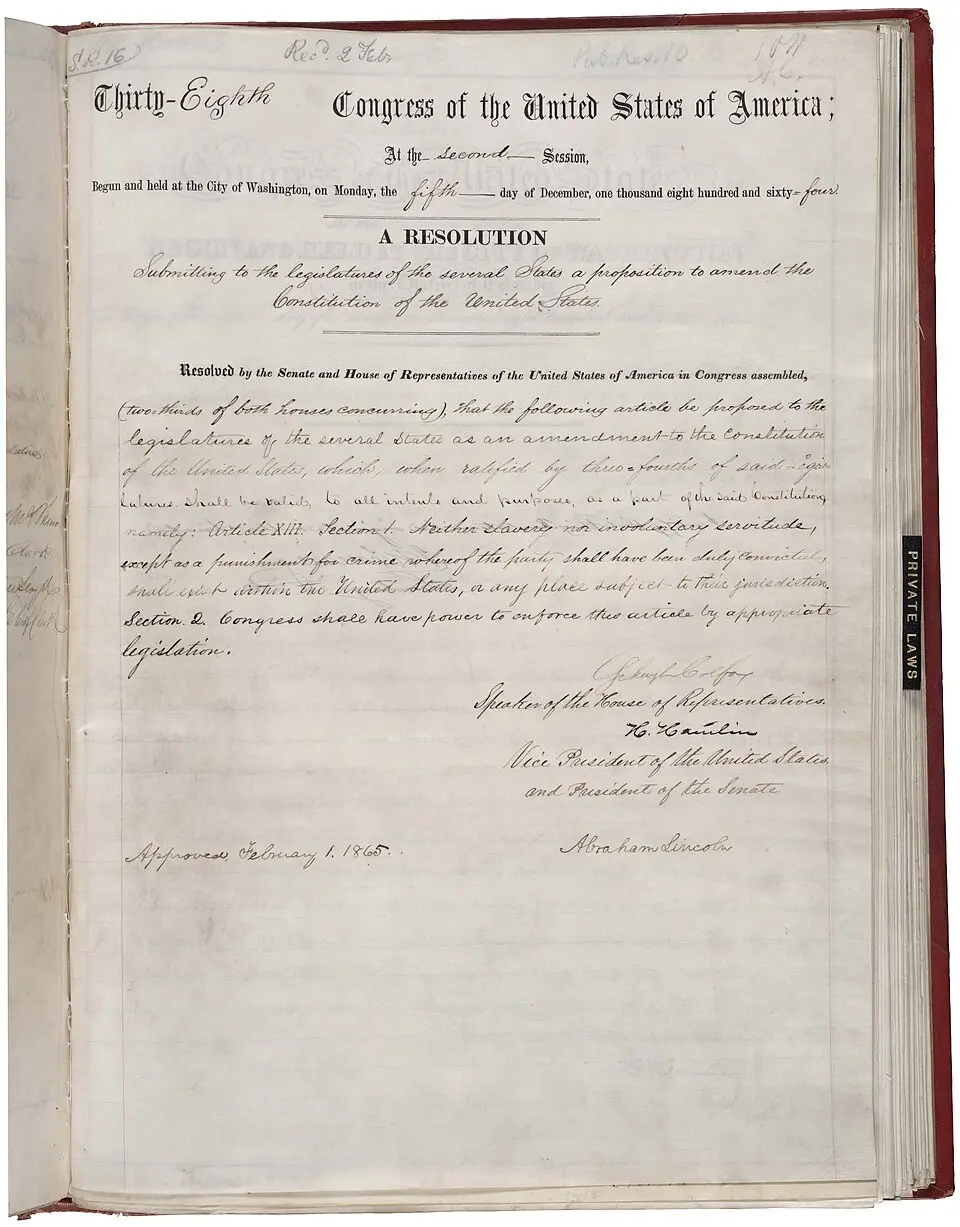
After the Civil War ended, the United States abolished slavery throughout the country by passing the Thirteenth Amendment in December 1865. Then, in 1866, the United States Supreme Court struck down the law that banned Black people from moving to Indiana. The Court ruled that a state could not keep people out because of the color of their skin when doing so violated the U.S. Constitution. For African Americans in Indiana, this was an important step forward. The three-part system the constitution had created was finally correcting one of its own worst mistakes.
Still, the road ahead was long and hard. The Indiana General Assembly held the power to change the state's laws, but it took years for lawmakers to act. Other unfair rules — the "black laws" that blocked Black people from voting, testifying in court, and attending integrated schools — remained in force long after the law to ban Black people from moving to Indiana fell.
Finally, by 1881, the Indiana General Assembly repealed the various black laws. The 1851 Constitution stayed as Indiana's main set of rules, and through the amendment process it could be changed over time. Indiana's climb out of the hole was real, but it was far from complete. African Americans still faced unequal treatment long afterward. Even so, the Indiana constitution's own rules for growth and change had let people push it, step by step, in a fairer direction.