 Pallas
Reading 4 of 14 · Indiana Grade 4 Social Studies
Indiana Becomes the Nineteenth State
Read the story told here and take notes on the Narrative Notes Template provided by your teacher.
Chapter One: An Appointed Governor Rules the Indiana Territory
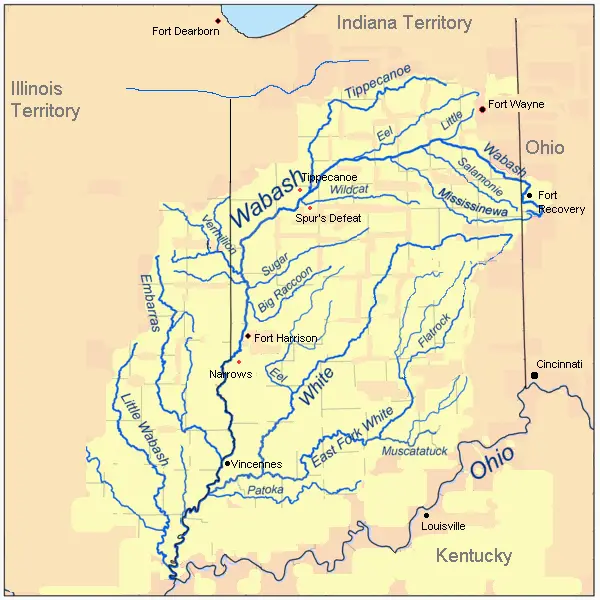
In 1800, the United States government created the Indiana Territory. It was a huge area of land. About 6,000 settlers lived there, along with around 12,000 Native Americans. A law called the Northwest Ordinance set the rules for how the territory could one day become a state. But the people who lived there had almost no say in how they were governed. The president picked a governor, and that governor held enormous power. He could block any law he disagreed with. The territory needed at least 60,000 people before it could become a state.
President Adams picked William Henry Harrison, a twenty-seven-year-old, as the Indiana Territory's first governor. Harrison set up his government in the small town of Vincennes. He held full power over all decisions and laws. He would serve as governor for twelve years. As the territory grew, settlers grew frustrated. Many had come from states where they could vote and choose their own leaders. Now they lived under a governor they had not chosen. They felt it was more like being ruled by a king. The law promised that statehood would come one day, but the territory needed many more people first, and that day still felt far away.
Chapter Two: Jonathan Jennings Champions Statehood for Indiana
Jonathan Jennings was a young lawyer who had moved to the Indiana Territory from Pennsylvania. Jennings disagreed with Governor Harrison and the powerful group around him. Many ordinary settlers liked him. These settlers were unhappy that Harrison and his friends made all the decisions for the territory. In 1809, Congress let the people of Indiana vote for someone to represent them. Jennings ran and won. He was only twenty-five years old.
Jennings worked hard to help Indiana become a state. Indiana settlers sent their first statehood petition (a formal request to become a state) to him in 1811, but Congress said no because not enough people lived in Indiana yet. A few years later, in December 1815, Indiana's leaders approved a new statehood petition and sent it to Congress to try again. Jennings helped get the request passed. President Madison signed it into law on April 19, 1816. Now Congress had given Indiana permission to become a state.
In June 1816, forty-three elected officials gathered in the little town of Corydon, Indiana to write a state constitution (the set of rules for how a government works). Jennings led the convention. The officials also decided that the people's elected leaders, not the governor alone, would hold most of the power. Indiana had its permission from Congress and now it had a constitution, too. Instead of one leader making all the choices, the people would have a real say in how their state was run.
Chapter Three: Indiana Joins the Union as a Democratic State
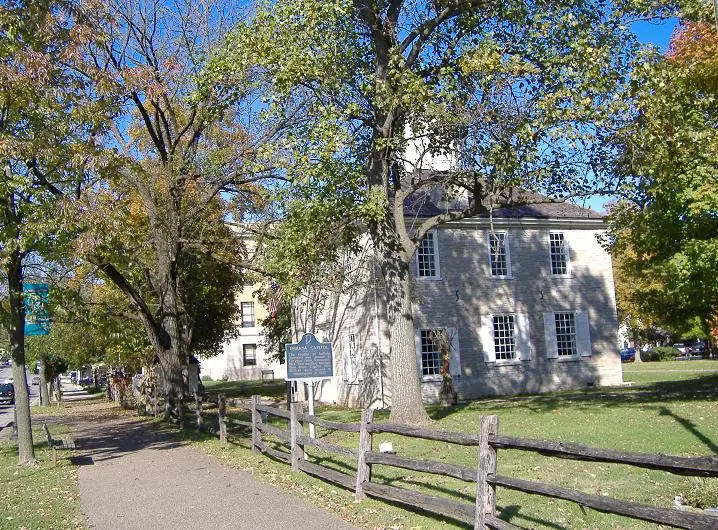
The delegates signed Indiana's new constitution on June 29, 1816. The territory quickly prepared for its first real elections on August 5, just five weeks later. Jennings won the election for governor. At just thirty-two years old, he was now the people's chosen leader. For the first time, the settlers of Indiana had picked their own governor.
The new constitution sharply limited the governor's powers. The old territorial governor could block any law on his own. Under the new constitution, though, if the governor tried to block a law, the legislature (the group of people elected to make laws) could vote to pass it anyway. The constitution gave all white men the right to vote. It also banned slavery, calling it a form of cruel and unfair rule that could never be allowed in the state.
On December 11, 1816, President Madison admitted Indiana as the nineteenth state in the Union. Indiana's population was roughly 64,000, which was just enough to qualify for statehood. Indiana had started as a territory where ordinary settlers had no voice. Now it was a real state with an elected governor and a constitution that limited government power and banned slavery.