 Pallas
The Ku Klux Klan in Indiana 7th grade · age 12
 By Simit Patel · published September 10, 2026
In 1924, why did so many ordinary white Protestant Hoosiers — ministers, shopkeepers, and factory workers — believe that joining the Ku Klux Klan made them good Americans?
The source
The Fiery Cross
About this document
By mid-1923, more than 118,000 Hoosiers had joined the Ku Klux Klan, making Indiana's KKK the largest in the country. D.C. Stephenson's recruiters told White Hoosiers that joining the Klan meant standing up for patriotism and "100% Americanism." Members came from the broad middle of Indiana society — ministers, shopkeepers, factory workers, and women all signed up. The Klan spread its message partly through its own newspaper, called The Fiery Cross, which tried to make people afraid of Catholics, immigrants, and African Americans.
This document is the front page of The Fiery Cross from September 21, 1923. Because it was a Klan-run newspaper, it did not try to report the news fairly — it was designed to promote the Klan's views and make the organization look respectable. The headlines on this front page mix ordinary-sounding local stories, like a county fair run by Klan members and Bible reading taught to young people, with political stories about immigration threatening America and attacks on a governor who had opposed the Klan.
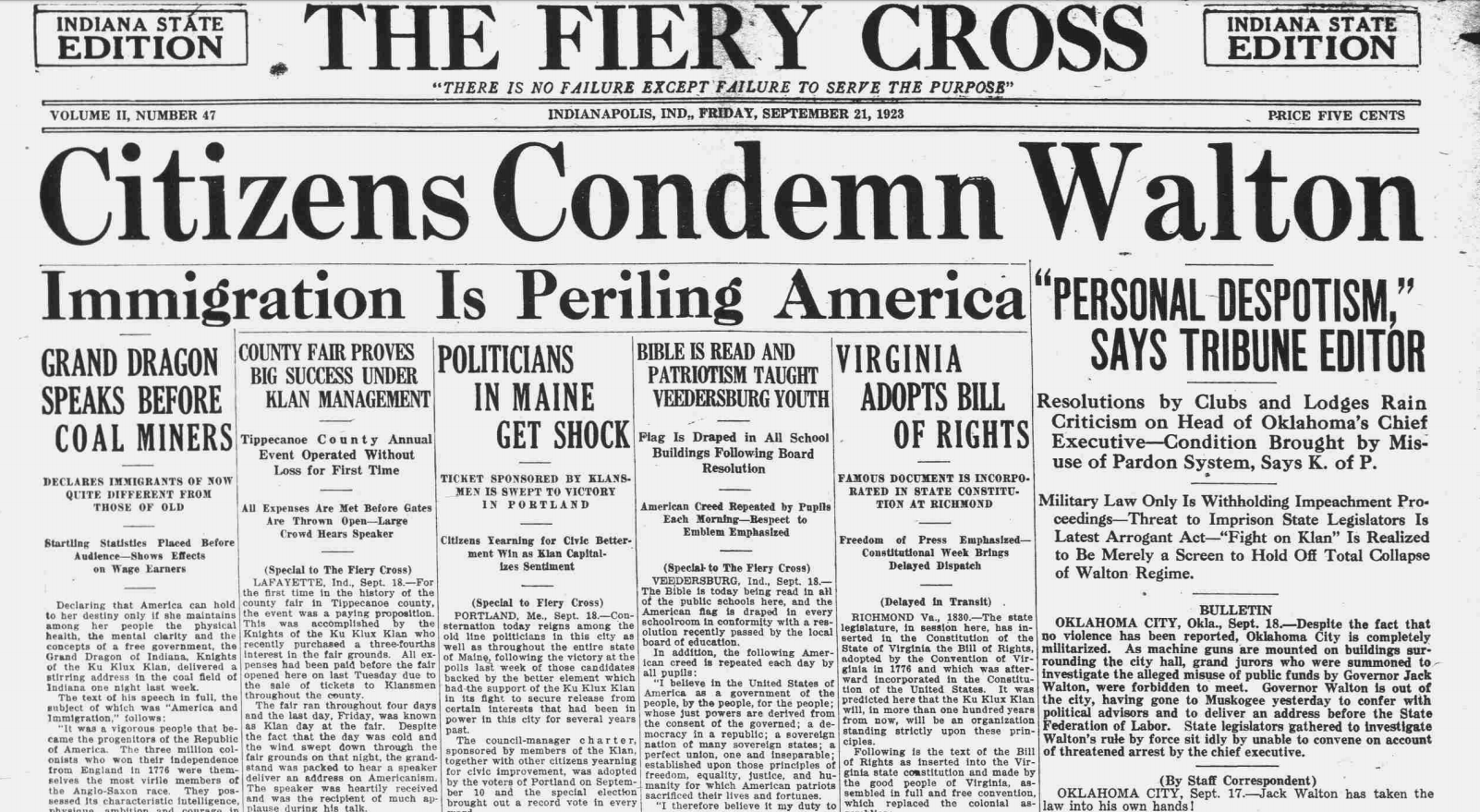

The Fiery Cross. “The Fiery Cross.” Wikimedia Commons, 1923-09-21, https://commons.wikimedia.org/wiki/File%3AThe%20Fiery%20Cross%20newspaper.png.
From The Ku Klux Klan in Indiana, a 7th grade history lesson on Pallas.