 Pallas
New York City Opens Its First Subway 4th grade · age 9
 By Simit Patel · published October 26, 2026
Read the story told here and take notes on the Narrative Notes Template provided by your teacher.
Chapter One: A Growing City Chokes on Its Own Traffic
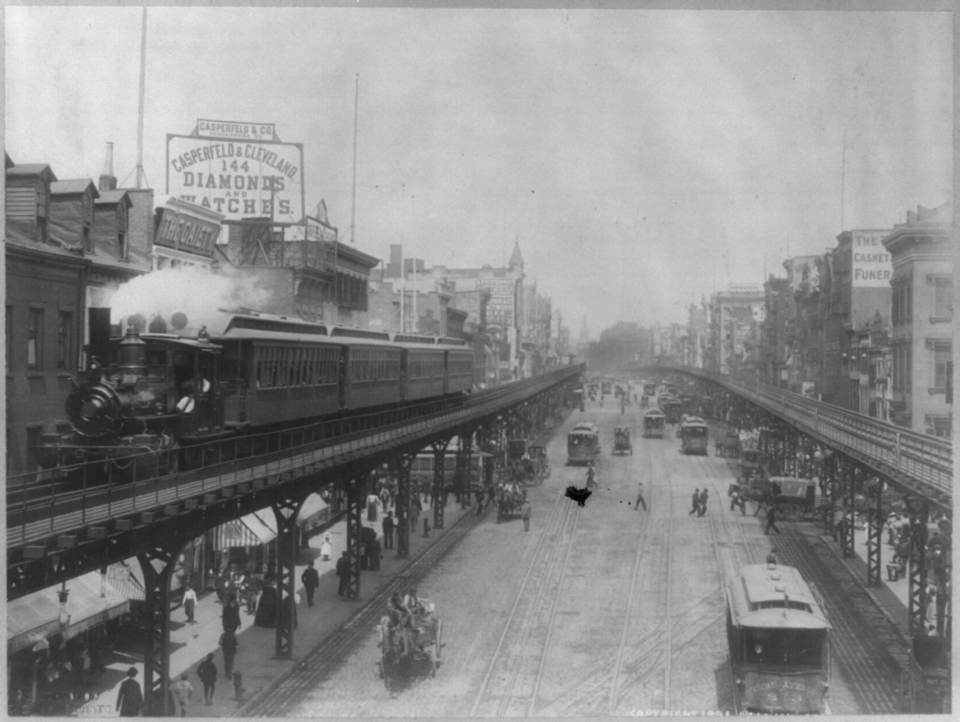
By the 1890s, New York City was packed with people. Millions lived there, and more kept coming. Land in Manhattan cost so much that working families could not afford to live there. Workers needed a way to travel from the outer boroughs — the Bronx, Brooklyn, and Queens — into Manhattan, where most of the jobs were. City streets were jammed with horses, wagons, and people.
The city did have elevated railways (train lines built on raised tracks above the streets). But they were noisy and ugly, and they blocked sunlight below. Worst of all, the fares were too high for working-class riders. New Yorkers needed something better. In the 1890s, a group called the Rapid Transit Commission started looking at plans for a new kind of train system. It would run underground. The goal was to give riders fast, cheap rides for just a nickel and to open up land in the outer boroughs for new homes and jobs.
Chapter Two: The City and August Belmont Build Underground
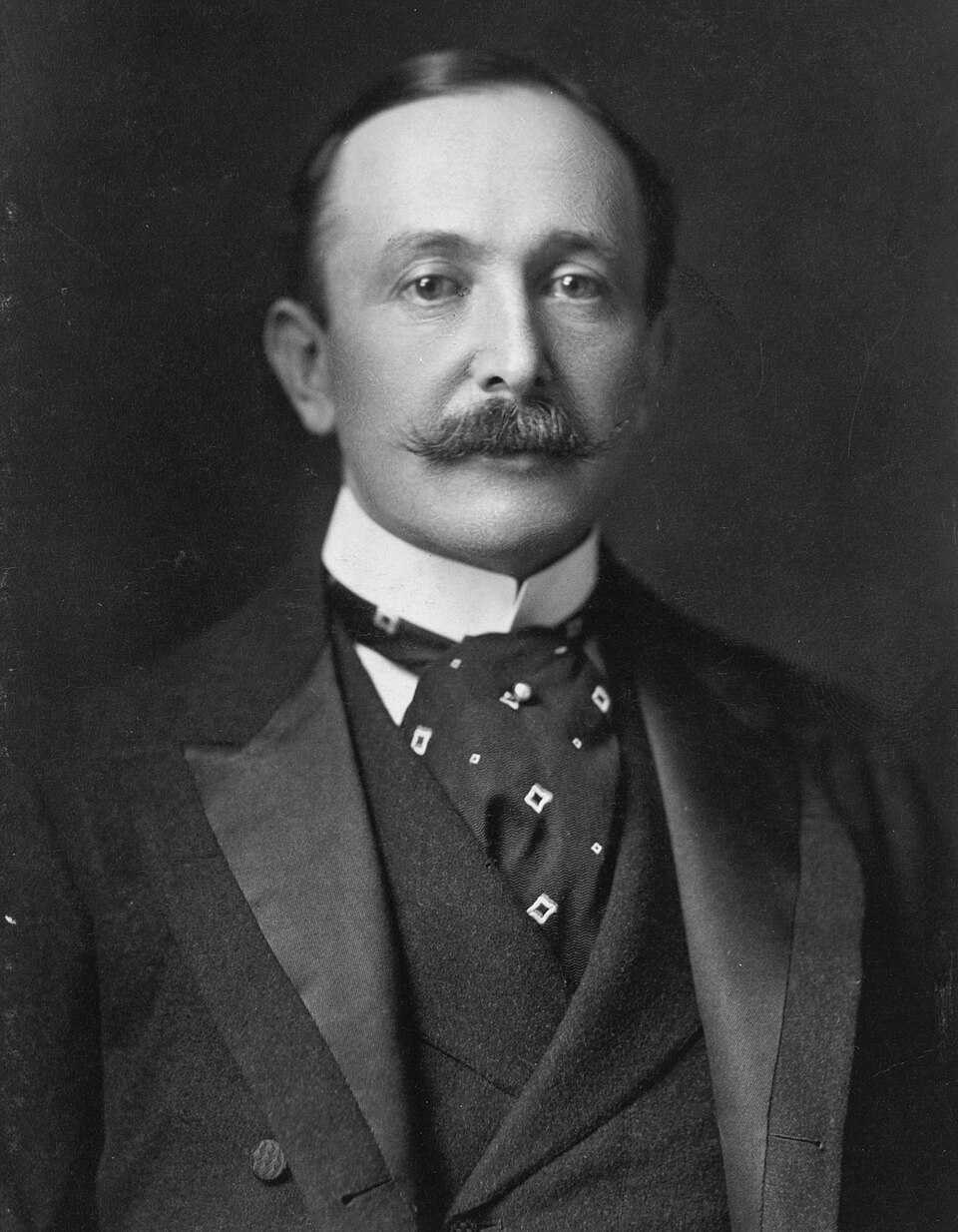
To build this affordable, underground train, New York City made a deal: the city would help pay, and a private company would run the trains. A wealthy man named August Belmont and his company, the Interborough Rapid Transit Company, won the right to build and run the subway. People shortened the name to the IRT.
Once work began, thousands of workers started digging into Manhattan's hard rock. They cut away huge amounts of rock out in the open and even more by tunneling deep underground. The subway's engineers also made the stations beautiful. The stations were decorated with colorful tiles and careful designs. The bright, clean stations surprised people who expected a subway to be dark and damp. Visitors who rode practice trains before opening day said that nowhere else in the world was there anything like them.
Chapter Three: Opening Day Crowds Pack the New Subway
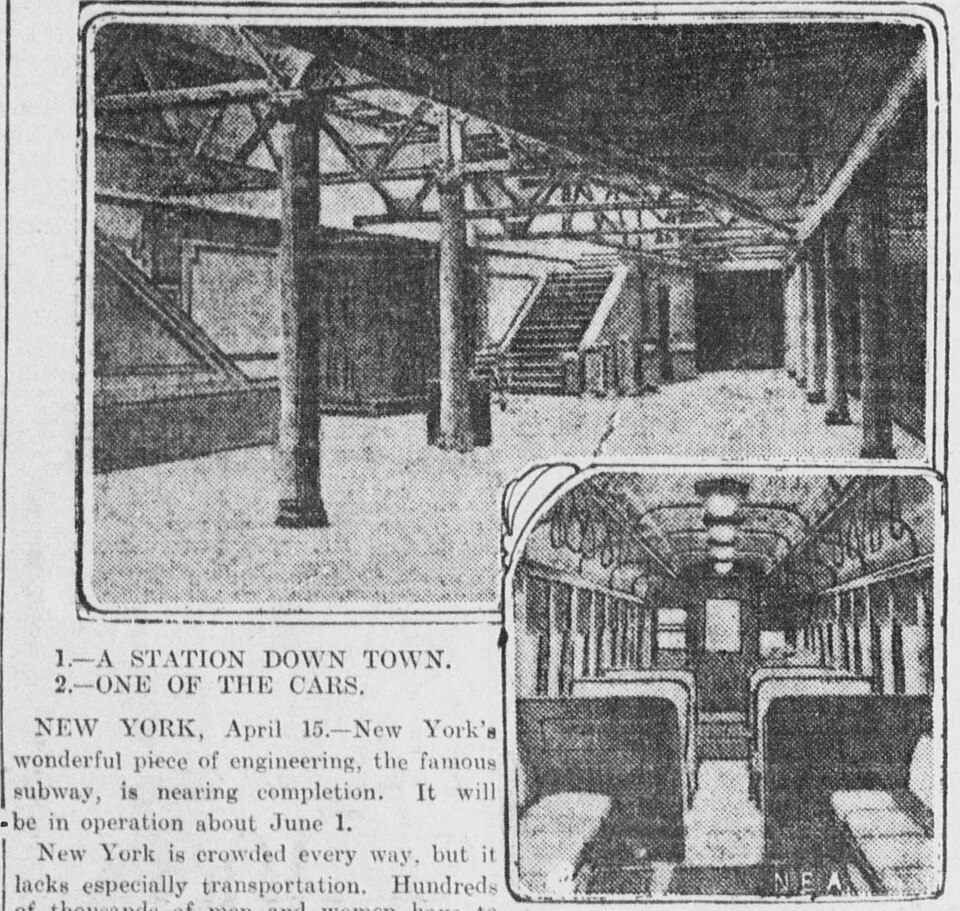
On October 27, 1904, the subway opened. Thousands of New Yorkers lined up at stations from City Hall all the way uptown in Manhattan. At the Fourteenth Street station, about 1,000 people walked through the entrances in just the first six minutes. Down on the platforms, trains ran on schedule. Everything worked as if the subway had been open for years.
The new subway changed life in New York City. Express trains could carry people from uptown to lower Manhattan in just ten to fifteen minutes. Parts of the Bronx and upper Manhattan had been empty. Now they had a fast way to get there, so builders put up new homes. Best of all, one ride cost just a nickel. Families who had been packed into tight neighborhoods could now think about living farther out, in places with more room. Almost right away, riders began asking for more lines to Brooklyn and the east side. The city's engineer soon made plans for new lines in Manhattan, the Bronx, and Brooklyn.
By the end of 1904, New Yorkers were sure their subway was the finest in the world. A worker could now live farther from the office and still get there quickly. A nickel ride made that possible for almost anyone. But the opening did not solve all of New York's transportation problems. So many people wanted new lines that it was clear this was only the beginning.
Standards this lesson meets
- 4.6c Improved technology such, as the steam engine and the telegraph made transportation and communication faster and easier. Later developments in transportation and communication technology had an effect on communities, the State, and the world.Chapters 1, 2 and 3: The reading describes how the new underground subway was a transportation technology that made travel faster and easier and changed where people in New York City could live and work.
- 4.6e Entrepreneurs and inventors associated with New York State have made important contributions to business and technology.Chapter 2: The reading presents entrepreneur August Belmont and his Interborough Rapid Transit Company winning the right to build and run the New York City subway.
- 4.6f Between 1865 and 1915, rapid industrialization occurred in New York State. Over time, industries and manufacturing continued to grow.Chapters 1, 2 and 3: The reading shows the growth of a major infrastructure and transit industry in New York around 1904, part of the rapid industrialization of the state in that era.
- B.3 Identify the relationship between multiple causes and multiple effects, using examples from his/her life or from a current event or history.Chapters 1 and 3: The reading links multiple causes (crowded city, high fares, costly land, need for jobs) to multiple effects (new homes in the outer boroughs, faster commutes, demand for more lines).
- C.4 Recognize the relationship between geography, economics, and history in social studies.Chapters 1 and 3: The reading connects geography (Manhattan's hard rock, the outer boroughs), economics (the nickel fare and jobs), and history to explain why and how the subway reshaped the city.
- C.5 Describe historical developments in New York State with specific detail, including time and place.Chapter 3: The reading describes the subway's opening with specific detail of time and place, such as October 27, 1904, and the crowds at the Fourteenth Street station.
- D.3 Identify how environments affect human activities and how human activities affect physical environments.Chapters 1, 2 and 3: The reading explains how the physical environment (hard rock to tunnel through) affected the project and how humans altered the environment by digging tunnels and building stations that opened up land for homes.
- D.5 Describe how human activities alter places and regions.Chapter 3: The reading describes how the subway altered places, allowing empty parts of the Bronx and upper Manhattan to fill with new homes.