 Pallas
Hohokam Canal Builders of the Salt River Valley 7th grade · age 12
 By Simit Patel · published October 2, 2026
Read the story told here and take notes on the Narrative Notes Template provided by your teacher.
Chapter One: Hohokam Farmers Settle the Desert Valley
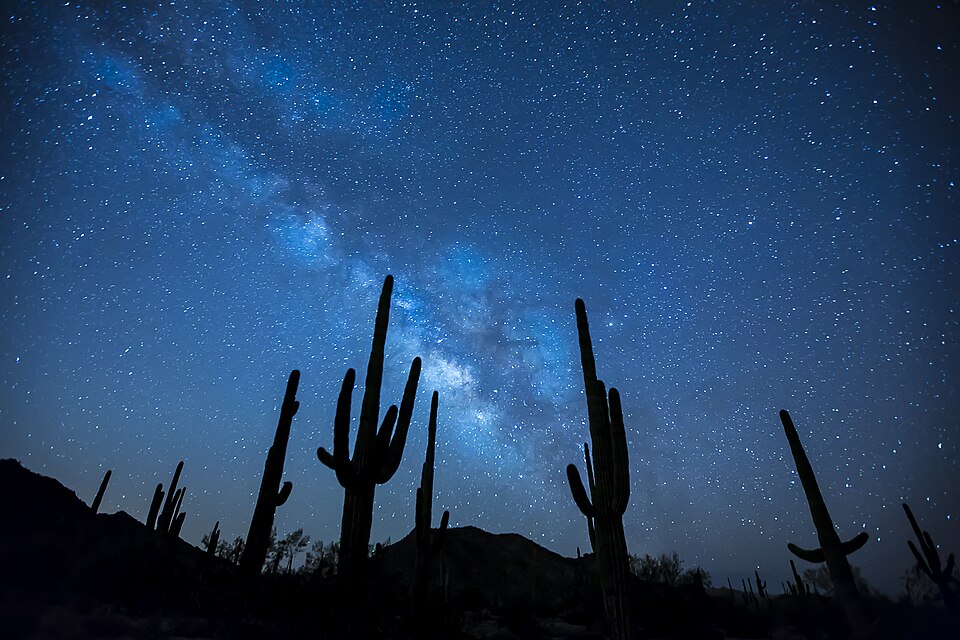
Long ago, in what is now the state of Arizona, a people called the Hohokam made their home. They settled in a place called the Salt River Valley, named for the river that ran through it. All around this valley lay the Sonoran Desert, a stretch of dry, sun-baked earth that received only a few inches of rain each year.
By AD 900, the Hohokam had built their villages here. Yet the Hohokam were committed farmers. They grew corn, beans, and squash and organized their villages around the rhythm of planting and harvest. They made pottery in red and tan colors, decorated with geometric designs and small human figures. Even in these early years, the Hohokam were already digging small canals to channel water from the Salt River to their fields.
The Hohokam also traded goods with peoples as far away as Mexico and the Great Plains. But all of this farming and trade depended on one thing the desert could not reliably provide: water. Without a steady supply, their crops would fail and their trade networks would collapse. The Hohokam needed to find a way to bring water from the Salt River to their fields on a far greater scale.
Chapter Two: Hohokam Engineers Build Hundreds of Miles of Canals
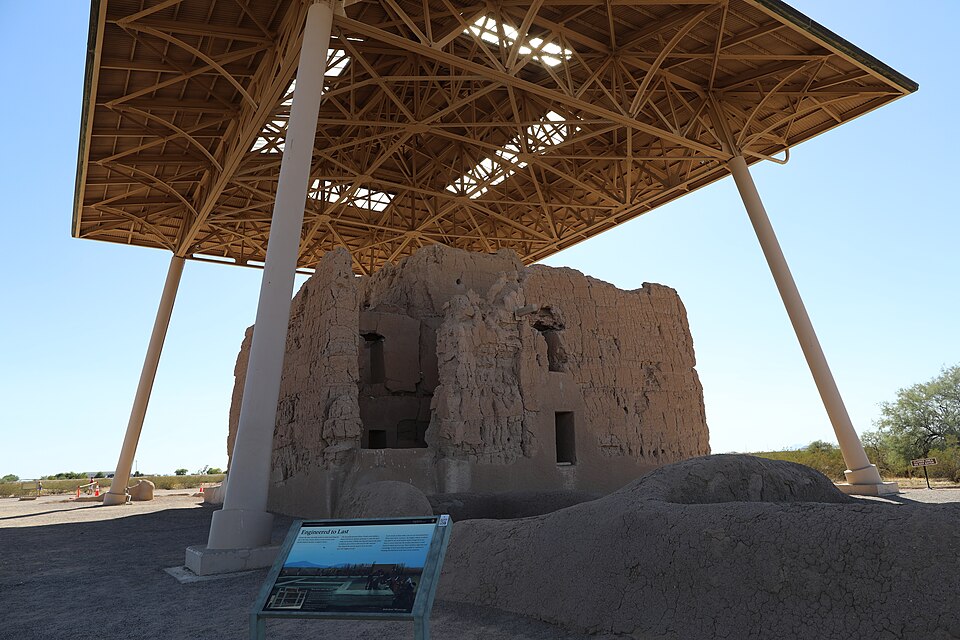
Between AD 900 and 1450, Hohokam laborers turned their early ditches into one of the largest canal networks in the ancient world. They had only stone picks and bone tools, but they dug more than eight hundred miles of main canals. They also dug hundreds of additional miles of smaller branches that carried water to fields. To keep water from soaking into the sand, workers lined many of these channels with clay. One system alone delivered enough water to irrigate (supply water to) an estimated ten thousand acres of farmland.
All that water let Hohokam farmers grow far more food than their own families could eat, producing surplus crops (extra harvests beyond what a community needs) for trade with distant peoples. Their villages became a crossroads in a trade network that reached south into Mexico, north to Utah, west to the Pacific Coast, and east into New Mexico and the Great Plains. The Hohokam raised multistory buildings and ball courts.
Chapter Three: Hohokam Communities Disperse Across the Region
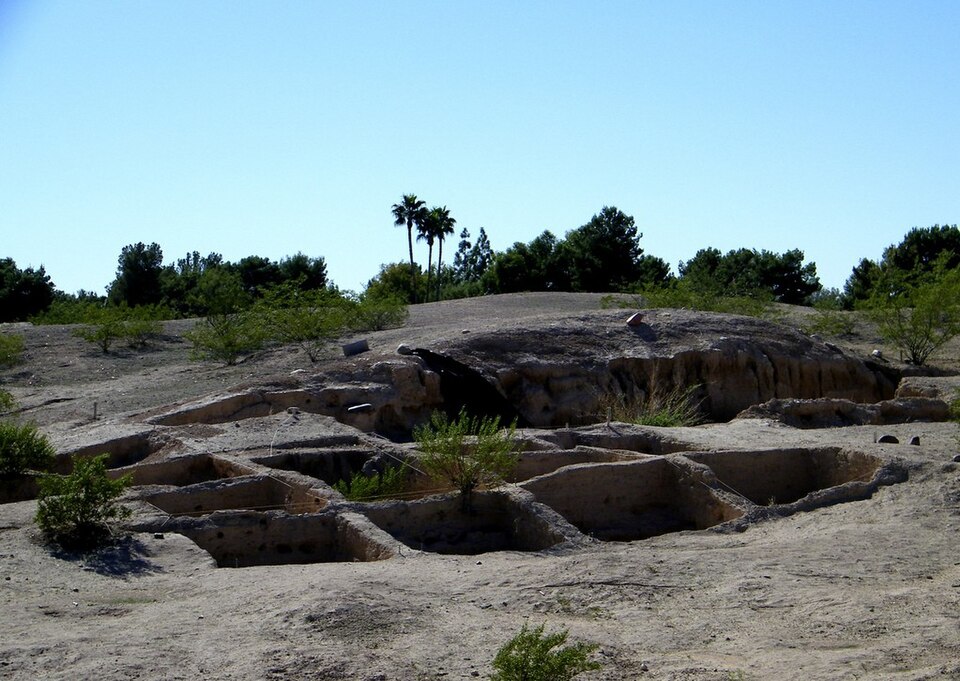
Then the Hohokam fell. By the 1300s, prolonged drought and crop failure likely drove the Hohokam from the very settlements they had spent centuries building. They abandoned their massive canals, emptied their ball courts, and walked away from multistory buildings that no one would use again. A trade network stretching from Mexico to Utah went silent. The Hohokam scattered into smaller communities across the region. Yet the Hohokam did not vanish without a trace. The O'odham people, descendants of the Hohokam, kept their memory alive. The O'odham named their ancestors the huhugam — meaning "those who have gone" — from which English speakers later derived the name Hohokam, the name we use today.
Modern Arizonans now live in the same valley the Hohokam once irrigated. They depend on water just as heavily. In recent years, drought has shrunk the rivers and reservoirs that feed their cities and farms. The eight-hundred-mile canal network that once kept a civilization alive — and whose collapse helped end it — is a reminder that even the greatest engineering cannot guarantee water in a desert forever.