 Pallas
From Transistors to Computer-Guided Robots 7th grade · age 12
 By Simit Patel · published October 6, 2026
Read the story told here and take notes on the Narrative Notes Template provided by your teacher.
Chapter One: Vacuum Tubes Limit Electronics and Computing
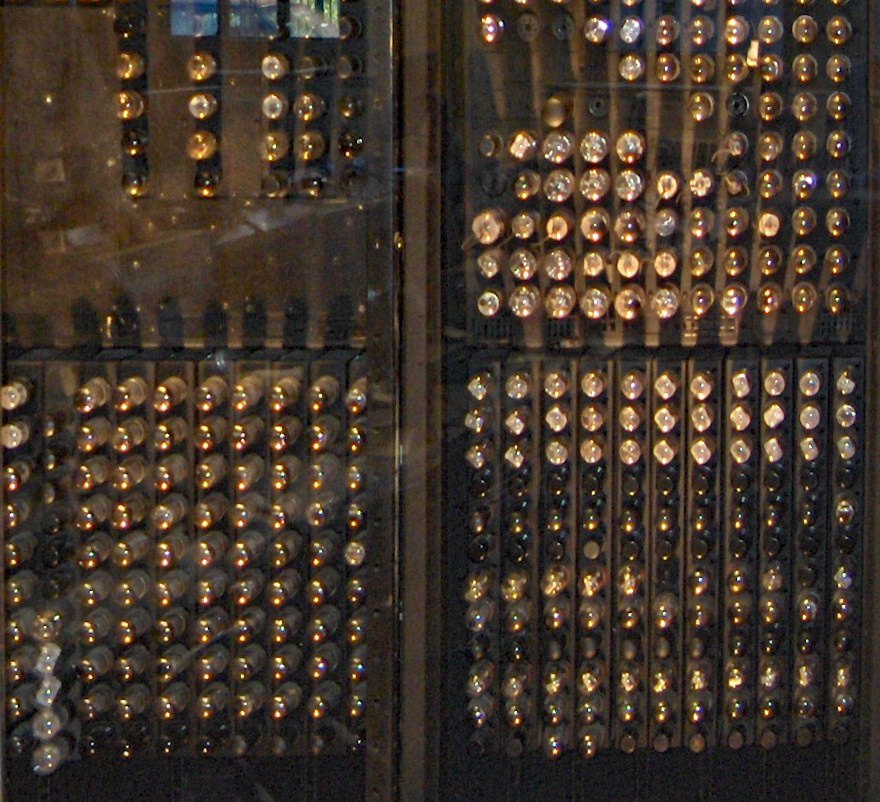
In the 1940s, the most powerful computers in the world were enormous, fragile machines. The first electronic computer, known as ENIAC, contained about 18,000 vacuum tubes — small glass bulbs that control electric currents. It stretched about 100 feet long and 10 feet high. It consumed enough electricity to light hundreds of homes. But the vacuum tubes that made it run were bulky, hot, and burned out often. The idea of small, affordable electronics seemed impossibly far away.
Engineers and scientists across the country searched for a way past the vacuum tube's limits. They experimented with different materials, built new circuits, and tested one design after another. They were trying to find something that could amplify electric signals without overheating or breaking down. Every big electronics project — from telephone systems to military computers — depended on their success. Until they could shrink electronics into something small and reliable, compact computers and programmable robots would remain impossible.
Chapter Two: Bell Labs Scientists Invent the Transistor
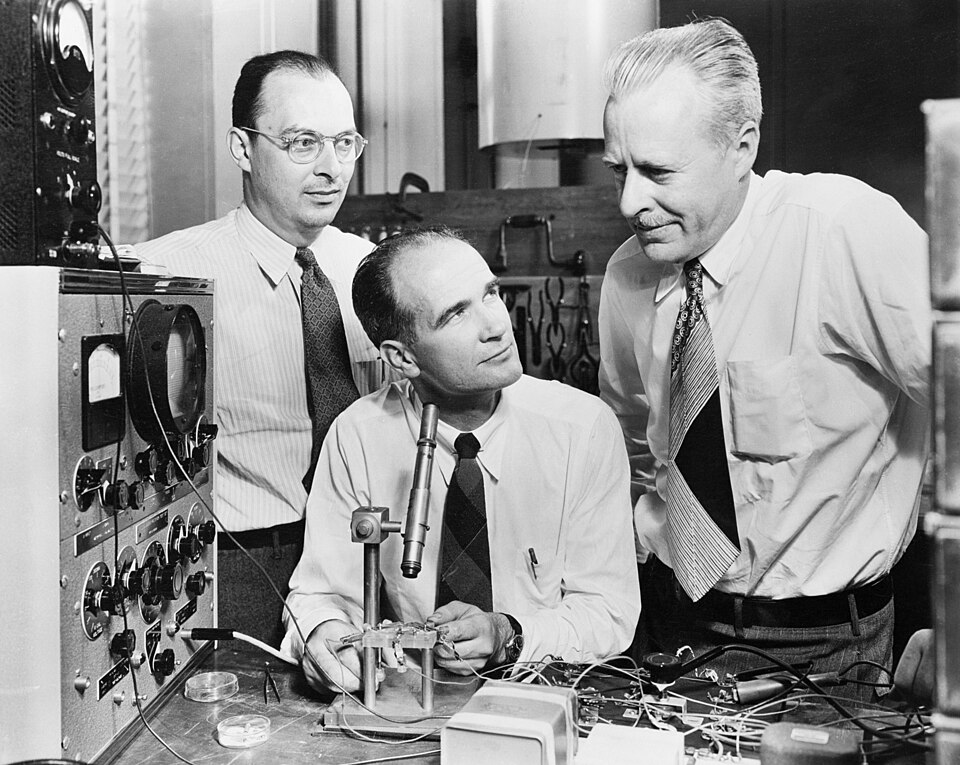
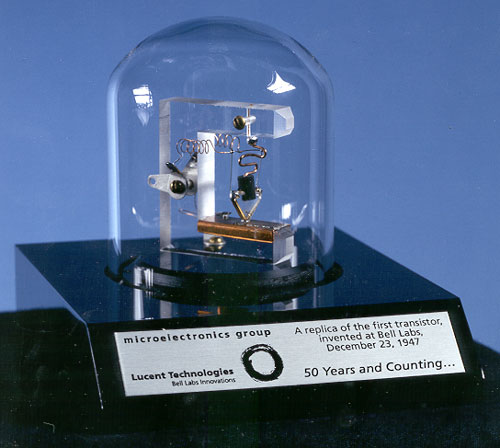
At Bell Telephone Laboratories in Murray Hill, New Jersey, three scientists set out to find that better device. John Bardeen, Walter Brattain, and William Shockley studied semiconductors — solid materials that can control the flow of electricity. They worked to build something smaller and more reliable than the vacuum tube. On December 23, 1947, they demonstrated the first working transistor. It was a tiny device that could do everything a vacuum tube did without the heat, the fragility, or the enormous size. It was smaller, cheaper, and far more reliable.
Bell Labs moved quickly to bring the transistor into everyday life. In 1953, the company introduced the transistor for commercial use and licensed the technology to other companies. Texas Instruments, one of those companies, helped produce the first pocket-sized transistor radio — the Regency TR-1. It was announced in October 1954 and went on sale on November 1. Customers bought about 100,000 units, and demand was far greater than supply for months. Ordinary people could now carry powerful electronics in their hands.
On December 10, 1956, in Stockholm, Sweden, Bardeen, Brattain, and Shockley shared the Nobel Prize in Physics for inventing the transistor. Their device had already led to the development of other tiny electronic parts. Electronics were getting smaller and cheaper every year.
Chapter Three: Transistors Power Computers and Industrial Robots
The Nobel Prize celebrated what the transistor had already accomplished, but its greatest impact was still unfolding. Intel, a company founded to make electronics smaller, cheaper, and faster, achieved a breakthrough in 1971 with the 4004 microprocessor. This single chip could do the work of an entire computer. Through the late 1970s and into the 1980s, Intel released more powerful microprocessors that became the backbone of the personal computer boom. Affordable desktop machines spread into offices and homes across the country. Microchips also found their way into cars, appliances, planes, and factory equipment. The technology that Bell Labs had set in motion now touched nearly every part of daily life.
Manufacturers and robotics engineers pushed the technology even further by bringing computer-guided industrial robots into factories during the 1980s. They used robots for tasks that were dangerous for people, especially welding and spray-painting. Some factories operated with only a handful of human employees. What had once required rooms full of hot, flickering vacuum tubes now fit on a chip smaller than a fingernail — and that chip was powering machines that could build, weld, and paint on their own.